
EWG's Food Scores: What They Are, How They Work, and How They Compare to the Food GreenScore®
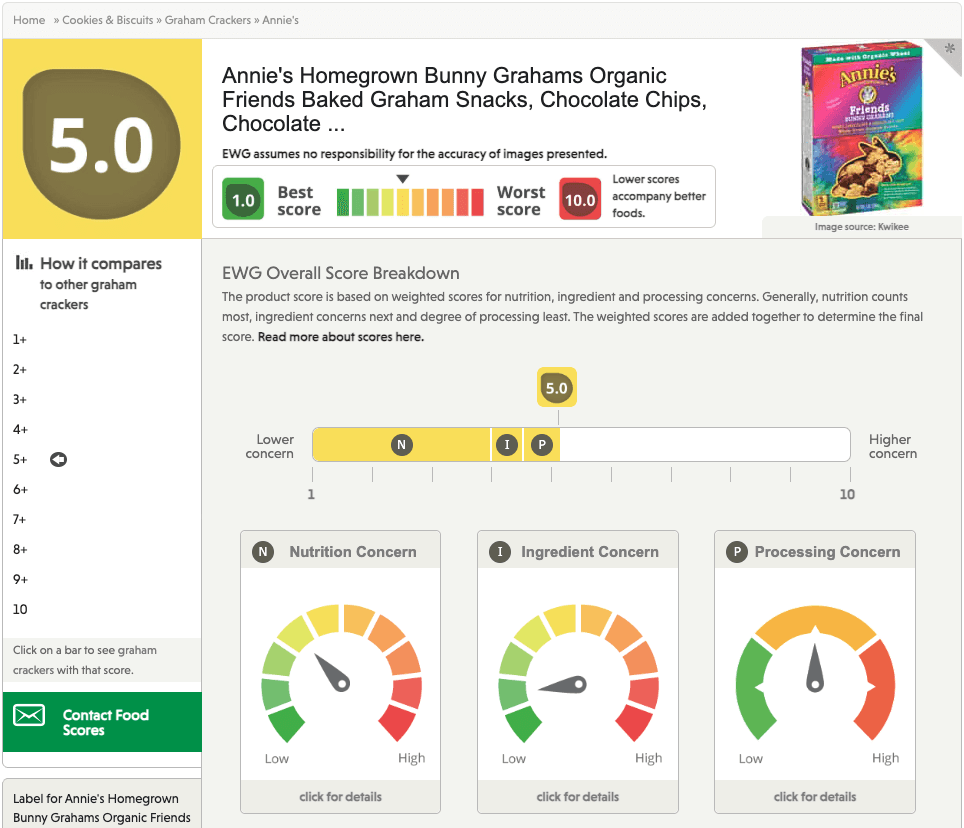
If you’ve come across the EWG Food Scores website, you’ve likely seen a simple number (1–10) attached to some of your favorite packaged foods. The goal is clear: make it easier for shoppers to quickly tell which foods are better for their health and which may raise concerns.
But what exactly goes into that number? And how do EWG’s Food Scores compare to new food health scoring systems like the Food GreenScore®? Let’s break it down.
What are EWG’s Food Scores?
EWG Food Scores was launched in 2014 by the Environmental Working Group (EWG), a nonprofit known for consumer guides like the Dirty Dozen and Skin Deep.
It is a food rating system that assigns packaged foods a score between:
1 = best (healthiest)
10 = worst (least healthy)
The goal is to help shoppers quickly see not just nutrition facts, but also concerns about ingredients and how processed a product is (EWG's Food Scores, Methodology).
How do EWG's Food Scores work?
EWG’s number is built from three parts. Each part gets its own score (1–10), and then they’re combined into an overall number.
1. Nutrition Score (70% of the total score)
What it measures: The balance of “positive” and “negative” nutrients and ingredients based on the UK's Ofcom nutrient profiling algorithm (EWG's Food Scores, Nutrition Score Methodology).
Positive factors: fiber (g), protein (g), and fruit, vegetable, bean and nut content (% weight).
Negative factors: sodium (mg), natural sugars (g) vs. added sugars (g), saturated fat (g), trans fat (ingredient based), low calorie sweeteners (ingredient based).
Example:
A plain oatmeal cereal scores better because it’s high in fiber and low in added sugar.
A frosted cereal scores worse because of high added sugar.
2. Ingredient Concerns (20% of the total score)
What it measures: If the product contains ingredients linked to health risks (EWG's Food Scores, Ingredient Concern Methodology).
The score considers:
Pesticides
Hormones or antibiotics in animal products
Artificial colors, flavors, or preservatives
Heavy metals (like mercury in some fish)
Example:
A yogurt with only milk and cultures will have few ingredient concerns.
A fruit snack with food dyes and artificial flavors will score worse.
3. Processing Score (10% of the total score)
What it measures: To what extent a food product has been processed, by estimating how far the product’s ingredients have been changed from their original form and analyzing the number of artificial ingredients (EWG's Food Scores, Processing Methodology).
The score considers:
"The processing steps typically used to manufacture a product's ingredients themselves."
"The origin of the ingredients (artificial vs. natural)."
"The sum of processes likely used to manufacture a given product."
Example:
A bag of frozen peas gets a low processing score.
A cheese puff snack gets a high processing score.
How are EWG's three Food Scores combined?
Every food gets three numbers: nutrition, ingredient concerns, and processing (EWG's Food Scores, Overall Methodology).
The three scores combine into a final score from 1-10, based on the following weights:
Nutrition = 70%
Ingredient concerns = 20%
Processing = 10%
If either ingredient or processing concerns are very high, they can “weigh more” and pull the overall score up (toward less healthy).
Final result: a single number from 1 (best) to 10 (worst).
Example:
A plain apple = low nutrition concern, low ingredient concern, low processing → score close to 1.
A sugary energy drink with artificial colors = poor nutrition, high ingredient concern, high processing → score closer to 10.
Strengths of EWG Food Scores
Simple for shoppers: A single number helps busy people make quick choices.
More than just nutrition: It doesn’t ignore pesticides, additives, or processing.
Transparency: EWG shows the breakdown (nutrition, ingredient, processing) so users can see why something scored poorly.
Limitations of EWG Food Scores
Outdated data: EWG's Food Scores database covers only 150,000 products. Many products you might buy are not scored. For context, the GreenChoice Food Product Database covers and scores over 750,000 products actively sold in the United States.
Ingredient “hazard” focus: EWG rates ingredient risks mostly on potential hazard, not actual exposure. This sometimes clashes with FDA or EFSA standards.
Nutrition model is old: It’s based on a UK scoring system from 2004. Newer models like Tufts' Food Compass and GreenChoice's Food Health Scores better reflect today’s nutrition science.
Portion-size blind: Scores are often calculated per 100 g. That works for comparing cereals but is misleading for foods eaten in small amounts (like oils, sauces, or spices).
How do EWG's Food Scores compare to GreenChoice's Food GreenScore®?
The Food GreenScore® is a newer food health scoring system created by GreenChoice, PBC, a public benefit food intelligence company. Like EWG’s Food Scores, it gives each food a simple food health score, but the way it’s built is more modern and comprehensive.
Here’s how they differ:
Feature | EWG's Food Scores | GreenChoice's Food GreenScore® |
Launched | 2014 | 2019 (and continuously updated) |
Database size | ~80,000 products | 1 million+ products |
Score range | 1–10 (lower = better) | 0–100 (higher = better) |
Factors considered | Nutrition, ingredient concerns, processing | Nutritional quality, food processing, ingredient safety, and climate footprint |
Serving size | Often per 100 g | Based on actual serving size |
Sustainability | Not scored | The Climate Footprint Score is based on a food products estimated carbon footprint and water footprint |
Scientific review | Based on older UK model; not regularly updated | Reviewed by external Science Advisory Board; and based on standards from the USDA Dietary Guidelines, World Health Organization (WHO), NOVA Food Classification, GHG Protocol, and Water Footprint Network |
Consumer use | Website and app (fairly clunky usability) | QR-enabled shelf tags in stores, free mobile app with personalized “shop by diet” features, website |
In simple terms:
EWG’s system is nutrition + ingredients + processing, but it’s dated and missing many foods.
GreenScore® is nutrition + ingredients + processing + food safety + climate impact, and it’s updated continuously.
Bottom Line
EWG Food Scores deserves credit for being one of the first tools to show shoppers that nutrition labels don’t tell the full story. It pushed the idea that ingredients and processing matter too.
But today, its limited product database, outdated nutrient profiling model, and lack of sustainability measures make EWG's Food Scores no longer the best food scoring system in 2025 and beyond.
If you're seeking a simple, evidence-based, and continuously updated alternative, the Food GreenScore® provides a more comprehensive and scientifically rigorous approach to comparing the healthfulness of your foods.
